
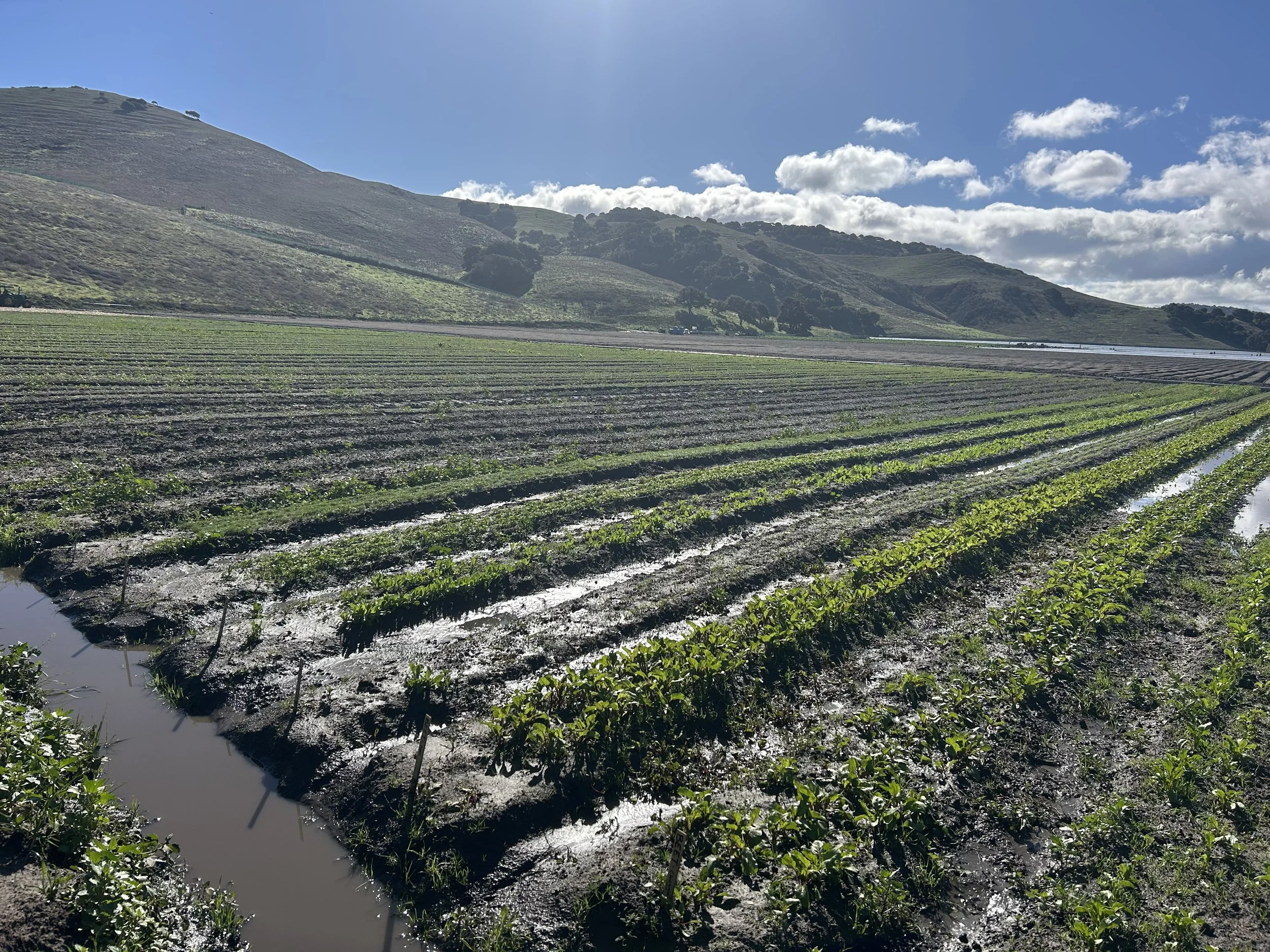
Breakdowns in Today’s (Fresh) Food Systems
SOCIAL
Rising Food Insecurity
Up from 12.8 percent to 13.5 percent of U.S. households (2022-23)
Public Health Issues
Diet related diseases, food deserts (limited fresh foods), food safety outbreaks, pesticide residues, PFAS chemicals, contaminated water
Farmworker Health Issues
Pesticide poisoning, chronic illnesses, respiratory issues, 2x suicide rates
BIPOC Farmer Systemic Barriers
E.g., land access, credit/loan access, lower generational capital, language and network barriers, underrepresentation in policy-making
Lack of Consumer Awareness
Consumers lack understanding of food's full economic health/nutrition and environmental implications leading to suboptimal individual and system choices
ECONOMIC
Concentration & Lack of Resilience
Less than four food companies dominate 80 percent of the U.S. food supply leading to less competition, less consumer choice, less crop diversity, price volatility, imbalanced policy influence, and less resilience to shocks, e.a., climate labor, imports, pandemics, crop disease
Small-Mid Farmer Economics
These farmers make an average of 15 cents on the consumer dollar, or $25-35K gross revenue/acre, struggle to make ends meet, and are going out of business - large farms ($1M+) account for 85 percent of CA agricultural sales
High Food Waste
30-40 percent U.S. food supply is wasted (20-30 percent at farm level, 10-12 percent in retail/distribution, 10-15 percent at consumer level) - 5160B estimated annual cost
High Transportation Costs & Distances
Typical farm items travel 1500 miles farm to plate; U.S. food transportation costs -$250B
Overproduced Subsidized Crops
40-50 percent of U.S. cropland is used to grow animal feed (corn, soy): 20-30 percent in CA cropland (primarily alfalfa)
ENVIRONMENTAL
Pollution
Fertilizer and pesticide runoffs, water impairment and contamination, air pollution
Climate Change Impacts
Crop risks from rising temperatures, heat waves, droughts, storms, floods and wildfires
Greenhouse Gas Emissions
16 percent livestock/grazing, 4 percent crop farmland, 5-10 percent food waste, plus indirect emissions from packaging, refrigeration, processing, transport
Soil Degradation
Soil erosion, loss of fertility, desertification
Groundwater Depletion
CA agriculture accounts for 40 percent of state's total water use (80 percent of developed water)
Biodiversity Loss
Pollinator decline, soil biodiversity decline, plant species decline, fish species decline